July 2025
Unlocking Africa's Data Future Through Interoperability
Despite increasing digitization, Africa's data remains siloed and fragmented. A lack of interoperability standards prevents data from informing public policy, service delivery, and innovation at scale.
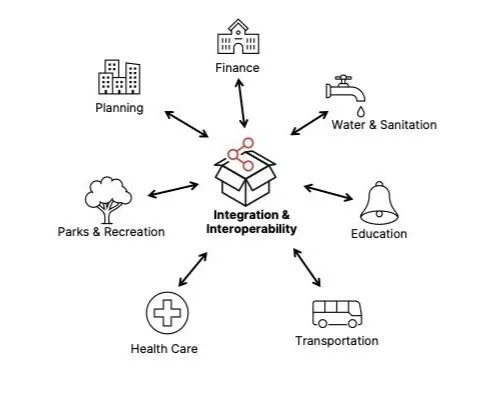
Executive Summary
From government ministries to private data platforms, a lack of interoperability standards prevents data from informing public policy, service delivery, and innovation at scale. This policy brief outlines the problem, offers practical recommendations, and highlights the opportunity for Africa to lead with an interoperable, secure, and ethical data infrastructure.
The Problem: Islands of Information in a Digital Era
Across West Africa, critical data remains locked within departmental silos, paper records, incompatible formats, or non-integrated digital tools. While many ministries and private actors collect valuable datasets—on jobs, health, education, or businesses—few of these systems can “speak to each other.”
Example: A Ministry of Education may run graduate tracer surveys, while the national tax authority holds business registration data. Yet without shared identifiers or data exchange protocols, it's impossible to know how many graduates became entrepreneurs or found formal work.
This disconnect is costly:
Duplicated Collection
Redundant data collection wastes time and donor funding across institutions.
Fragmented Insights
Disconnected data delays policy responses and undermines evidence-based decisions.
Innovation Barriers
Private innovators struggle to build services when data access is unclear or inconsistent.
Why Interoperability Matters
Interoperability is the ability of systems and organizations to exchange and make use of information. In the data ecosystem, this means:
Common Schemas
Standardized formats for names, locations, and institutions
Secure APIs
Controlled access for authorized data exchange
Metadata Standards
Clear documentation for discoverability
Real-World Examples
Ghana: Digital health data systems like DHIMS II do not automatically align with district-level birth registry data or insurance databases, making it difficult to track maternal care outcomes longitudinally.
Nigeria: Government platforms managing SME grants are not linked to state-level financial registries, hindering monitoring of program impact and duplicate registrations.
A Fragmented Data Journey
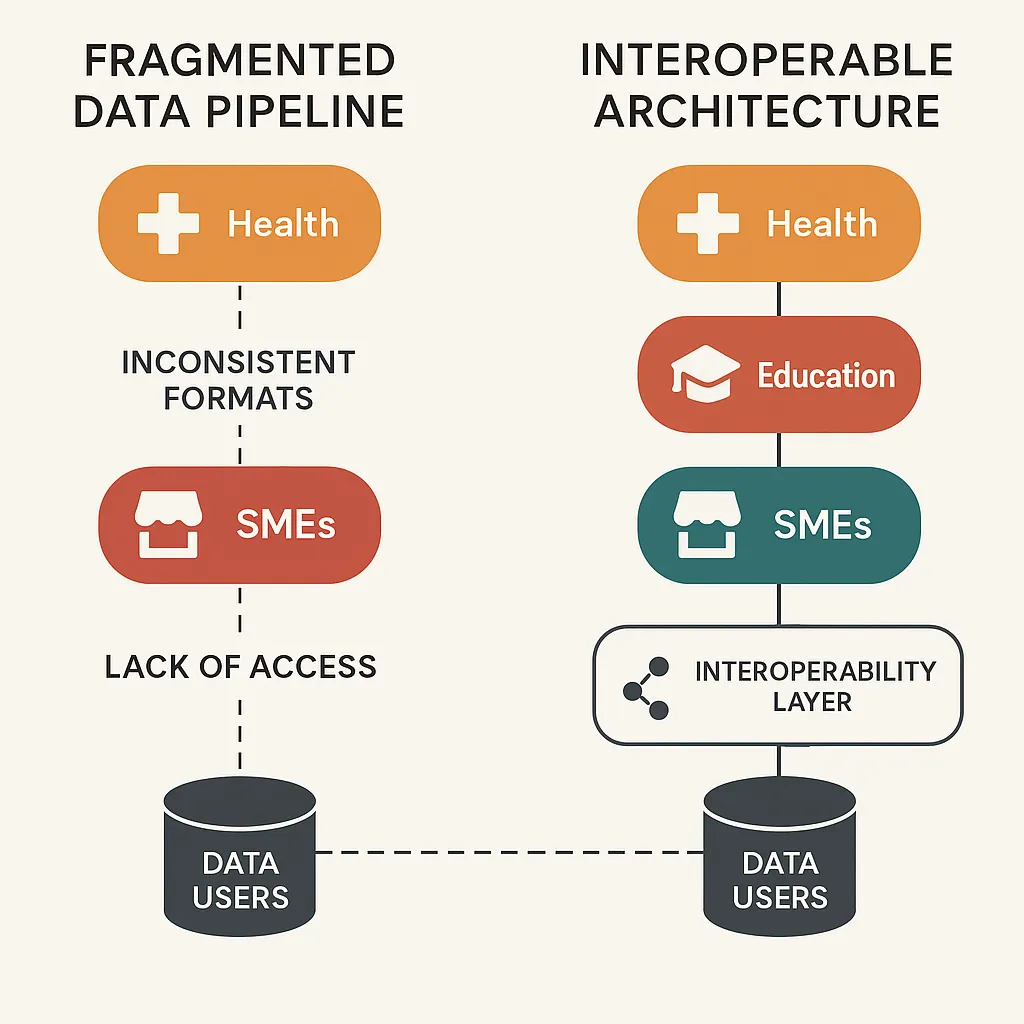
The image above tells a familiar story across West Africa. Different institutions—health offices, education ministries, NGOs—are all collecting valuable data. But each uses their own tools: Excel files, paper forms, custom apps, or offline devices.
“Data may be plentiful across ministries—orphaned in documents—but systems often lack shared protocols to communicate.”
The Promise of Connected Systems
Collaboration over Duplication
Institutions share data instead of collecting it multiple times
Automation over Manual Rework
Systems exchange data automatically through APIs
Recommendations
Adopt Regional Interoperability Standards
ECOWAS and African Union frameworks should define core schemas and APIs for sectors like health, education, agriculture, and finance.
Establish Data Exchange Authorities
Each country should empower a body to coordinate cross-ministry data governance, interoperability, and quality assurance.
Fund Open Source and Shared Infrastructure
Donors and governments must invest in infrastructure that makes interoperability easy: API gateways, metadata catalogs, anonymization tools.
Promote Incentives for Publishing Interoperable Data
Tie funding, recognition, and regulatory benefits to institutions that publish well-structured, accessible datasets.
Support Capacity Building
Equip data stewards and developers with tools and training to build on interoperable systems.
Conclusion
Data interoperability is not a luxury—it's the backbone of effective governance, inclusive innovation, and evidence-based decision-making. Africa's digital future depends not just on collecting more data, but on connecting it meaningfully.
About the Author
Emmanuel Twum Osafo
Founder & CEO at IndaSurvey
Emmanuel is building Africa's premier data collection infrastructure through verified enumerator networks and interoperable systems. With over 10 years of experience in survey research and data collection across African markets, he leads IndaSurvey's mission to bridge voices and decisions across continents.
Credentials:
- •10+ years experience in African market research and data collection
- •Built verified enumerator network across 15+ African countries
- •Expert in survey methodologies, data interoperability, and offline-first technology
Building Interoperable Data Infrastructure
IndaSurvey is designed with interoperability at its core—standardized data formats, API-first architecture, and seamless integration with existing systems.